How to spot at-risk students with the data you already have
A practical framework for reviewing attendance, course performance, and engagement together, with locally validated thresholds and human judgment.
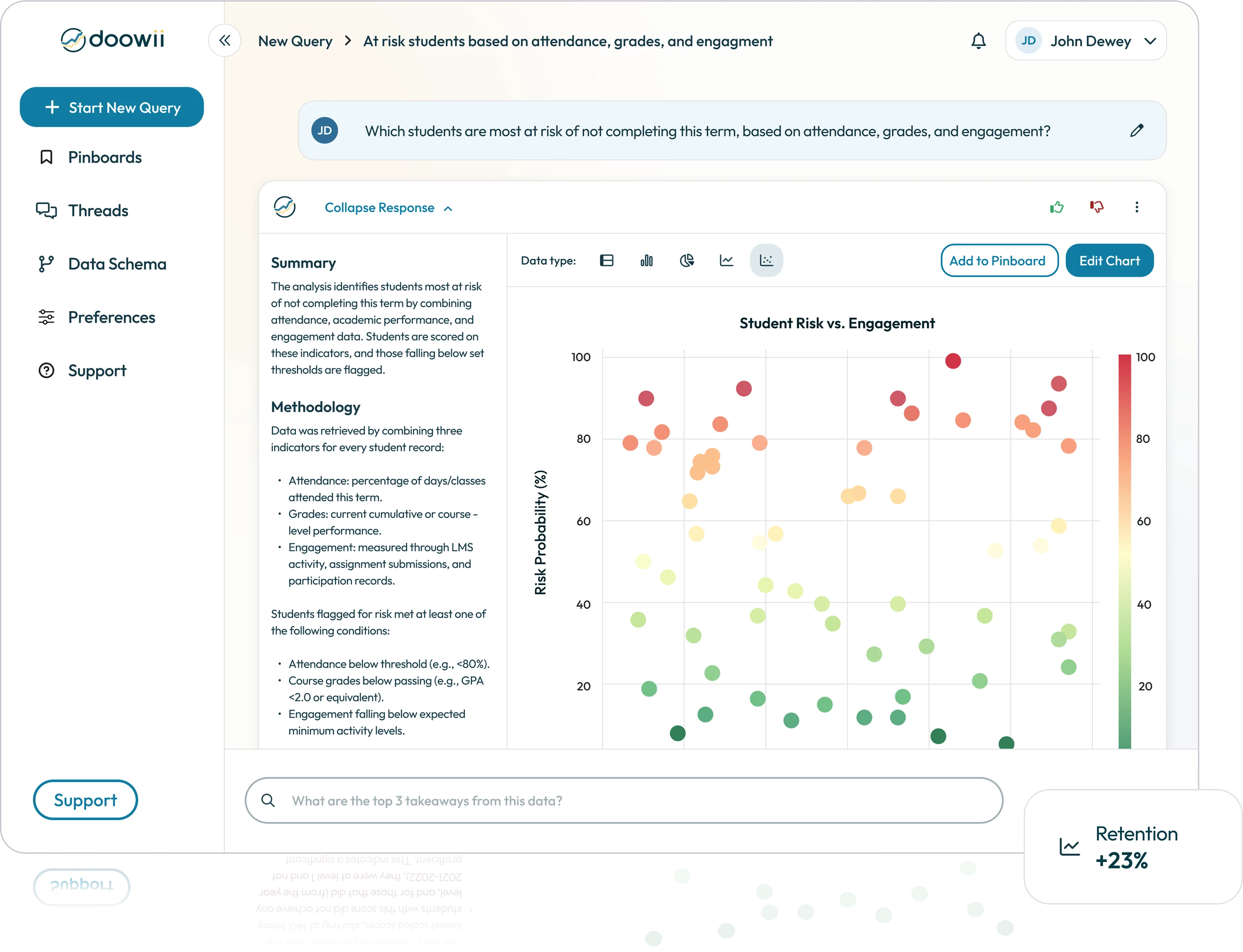
Many schools already collect useful indicators of student progress, but those signals often live in separate systems. Here is a practical way to review several indicators together while preserving local context and human judgment.
The three signals that matter most
Attendance, course performance, and engagement are common starting points for investigation:
- Attendance: the percentage of days or classes attended this term.
- Grades: current cumulative or course-level performance.
- Engagement: participation, assignment submissions, and LMS activity.
Any one of these on its own is incomplete. Used together and interpreted in local context, they can help an authorized team decide where closer review may be useful.
Review the signals together without hiding the context
A review rule might consider locally defined changes such as:
- A sustained attendance change relative to district policy
- Course performance below an institution-defined level
- Engagement that drops below the student’s or cohort’s expected pattern
Reviewing several indicators together, rather than reacting to a single event, can support earlier investigation. A combined indicator may be useful in some approved workflows, but authorized staff should still be able to inspect the contributing signals and relevant context. Thresholds and any weighting should be validated locally and used with human judgment, not as an automated decision about a student.
Why cross-system review gets difficult
Doing this manually can mean exporting from the SIS, LMS, and gradebook, reconciling identifiers, and rebuilding the analysis each term. That makes consistent definitions and repeatable review harder to maintain.
A unified education data platform can make the workflow repeatable: connect approved sources, define the indicators, ask “Which students may warrant closer review based on attendance, grades, and engagement?”, and inspect the contributing factors with the authorized people who can respond. See how that operating model applies to student retention analytics.
From flag to action
The signal is only useful if it reaches the right authorized person. Treat a flag as a prompt for closer review, not as a finding about a student. Connect it to the institution’s established support process.
Want to walk through a representative workflow? Request a demo or explore what Doowii does for K-12 and higher education.
See the unified platform in practice
Explore representative education workflows for governed questions, reports, and shared metrics.